Neurofeedback is a non-invasive training method that helps the brain learn to regulate itself more effectively. By monitoring brainwave activity in real time, we can gently guide the brain toward more stable and efficient patterns.
When the nervous system becomes better regulated, many people experience improvements in focus, emotional stability, sleep, and stress resilience.
Neurofeedback is commonly used to support individuals experiencing:
• ADHD and attention challenges
• Anxiety and chronic stress
• Trauma and PTSD
• Autism spectrum regulation
• Sleep disruption
At Thrive with Neurofeedback, each program begins with a QEEG brain map, allowing us to understand your brain’s unique patterns and design a personalized training plan.
Neurofeedback can be helpful when the nervous system has difficulty maintaining balance. Many children, teens, and adults experience patterns of over-activation or under-activation in the brain that affect focus, emotional regulation, sleep, and resilience to stress.
You or your child may benefit from neurofeedback if you are experiencing:
Many families come to Thrive with Neurofeedback after trying traditional therapy, medication, or school supports — yet still sensing that something deeper in the nervous system is contributing to the challenge.
Neurofeedback helps the brain practice more stable patterns, supporting lasting improvements in regulation, focus, and emotional balance.

Quantitative EEG (QEEG), often called brain mapping, is a non-invasive assessment that measures brainwave activity. Small sensors placed on the scalp record patterns of electrical activity, allowing us to see how different regions of the brain are functioning.
This information helps us understand how your nervous system is regulating attention, emotion, sleep, and stress — and guides a personalized neurofeedback training plan.

Brain mapping gives us a deeper understanding of how the brain is functioning beneath the surface of symptoms. Two people may experience similar challenges — such as attention difficulty or anxiety — yet have very different brain activity patterns.
By mapping the brain first, we can identify areas of over-activation or under-activation and design a neurofeedback plan tailored specifically to those patterns.
Benefits of Brain Mapping:
After your brain mapping session, we review the findings together and use them to design a personalized neurofeedback training plan focused on your goals and needs.
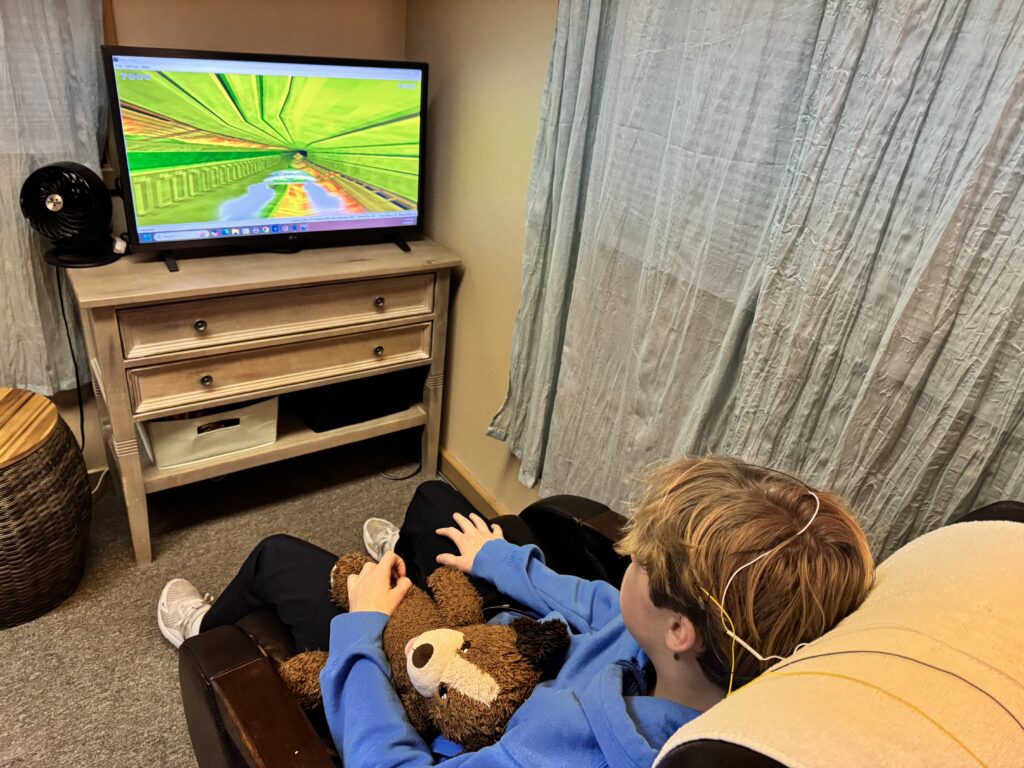
Neurofeedback training (also referred to as Biofeedback) helps the brain learn more stable and efficient patterns of activity. During a session, small sensors placed on the scalp monitor brainwave activity while you relax and watch a screen or listen to audio feedback.
The brain receives real-time information about its activity and gradually learns to shift toward healthier patterns. Over time, this training helps strengthen the brain’s ability to regulate attention, emotion, sleep, and stress responses.
Why This Helps:

If you’re exploring ways to support your child or teen’s emotional well-being, neurofeedback offers a safe, non-invasive approach to strengthening the brain’s ability to regulate attention, emotions, and stress.
Many families seek neurofeedback when their child is struggling with challenges such as ADHD, anxiety, sleep disruption, trauma, or emotional overwhelm. By helping the nervous system develop more stable patterns of activity, neurofeedback can support improved focus, emotional balance, and resilience over time.
“ Neurofeedback was a turning point in our journey through crisis toward healing from developmental trauma. It calmed our child’s nervous system so they can stay in their thinking brain more often and manage difficult feelings. “
Parent of Current Client
“I used to get really angry at the smallest things, and it was hard to stop once I started getting upset. After doing neurofeedback, I feel way more in control. When I feel myself starting to get mad, I can calm down before it gets too big. My family noticed it, too—they say I don’t yell as much, and I’m even getting along better with my friends. Neurofeedback has made a big difference. It feels like my brain finally has a way to hit the ‘pause’ button. I can stay calm and think more clearly now.”
Client - Age 11
If you’re curious whether neurofeedback may help you or your child, the first step is a consultation where we can discuss your concerns and determine whether this approach is a good fit.